
Last updated November 15, 2026
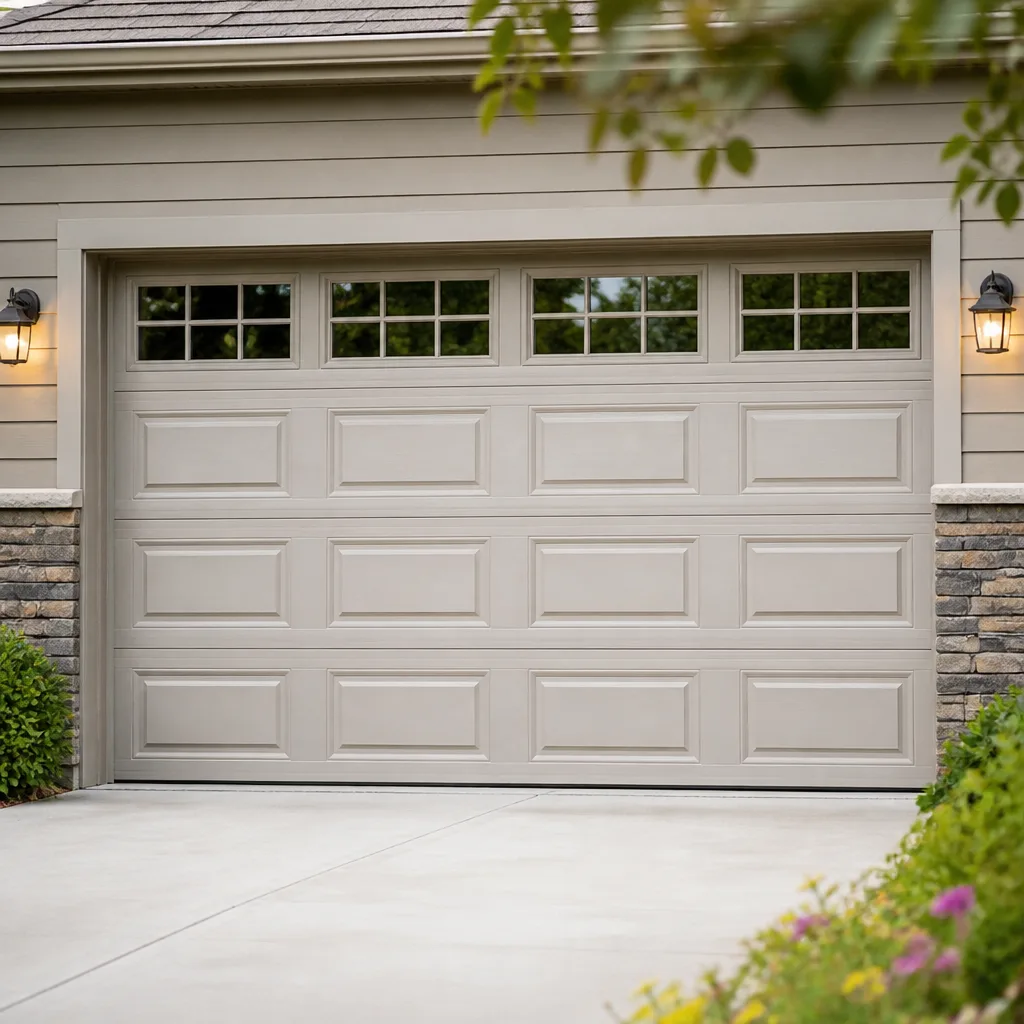 Raised-panel steel
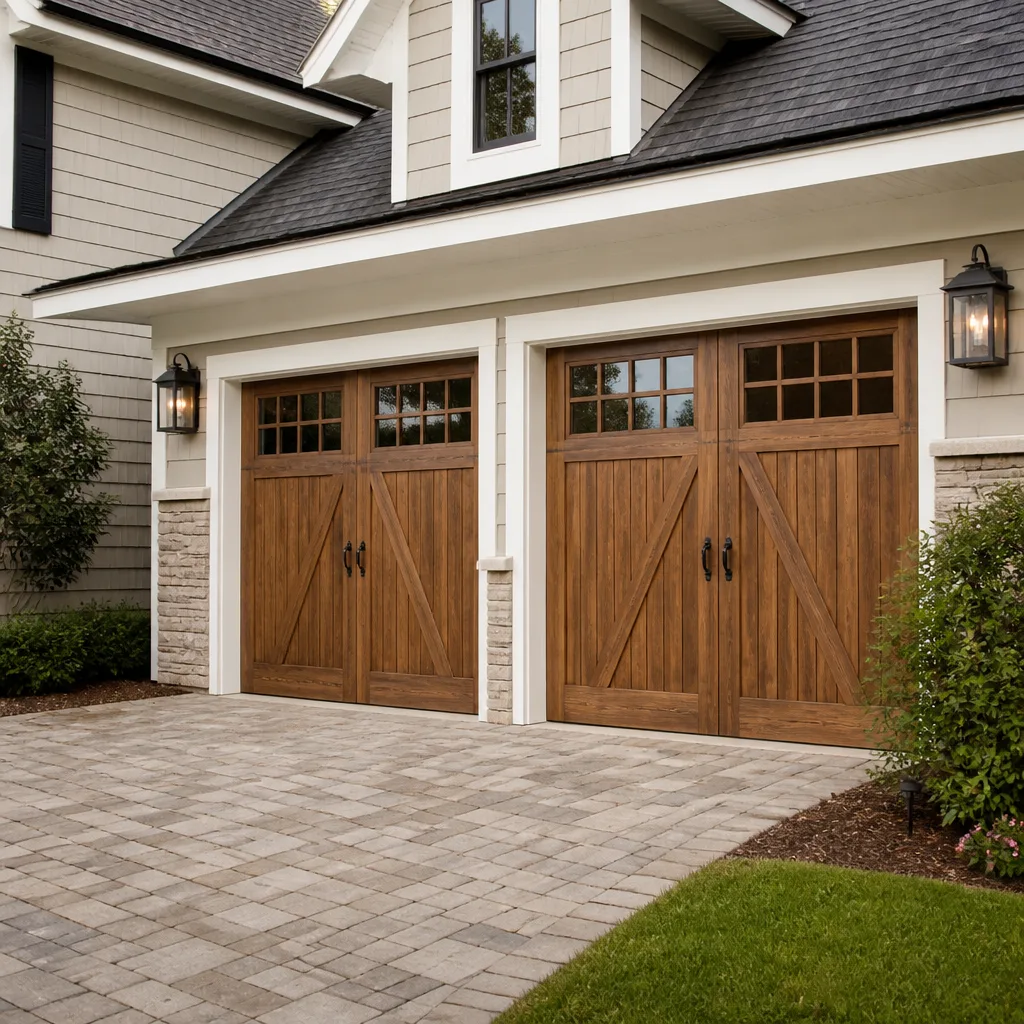 Carriage house
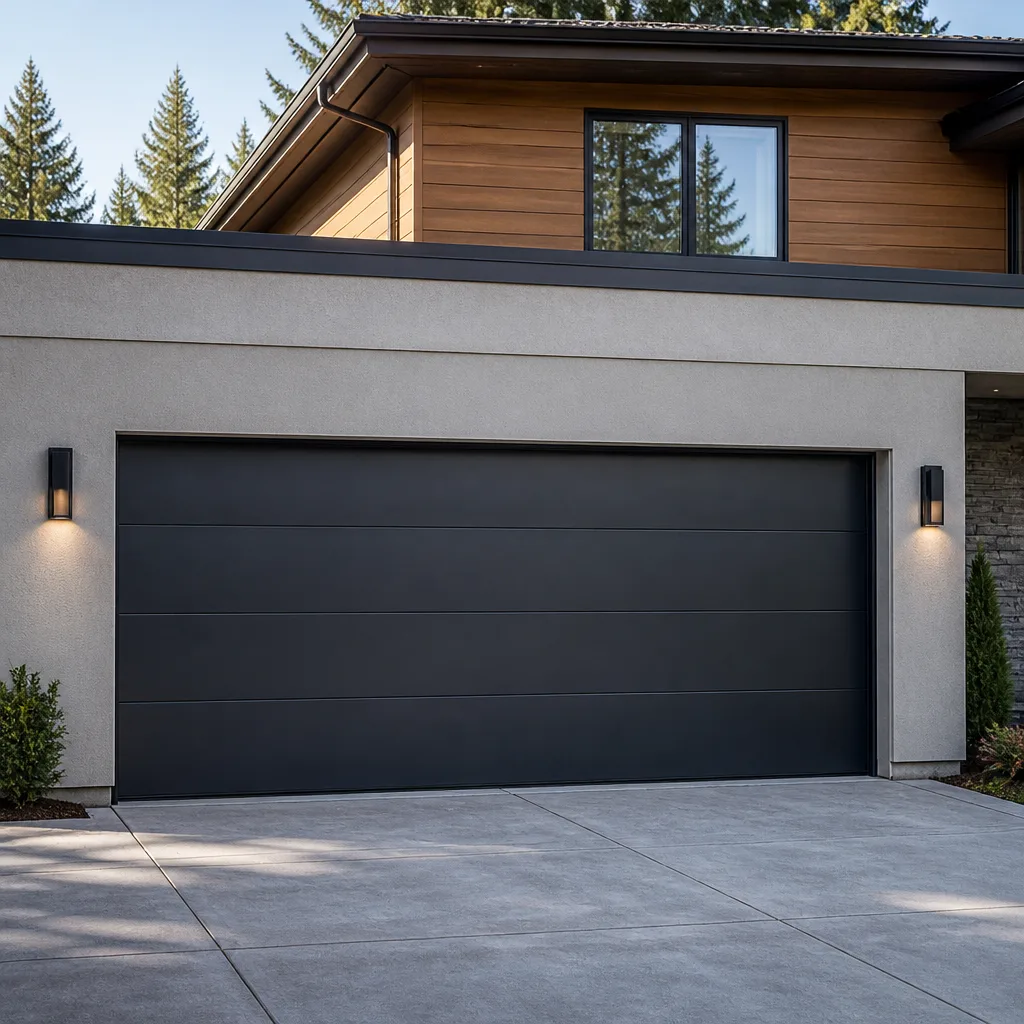 Modern flush
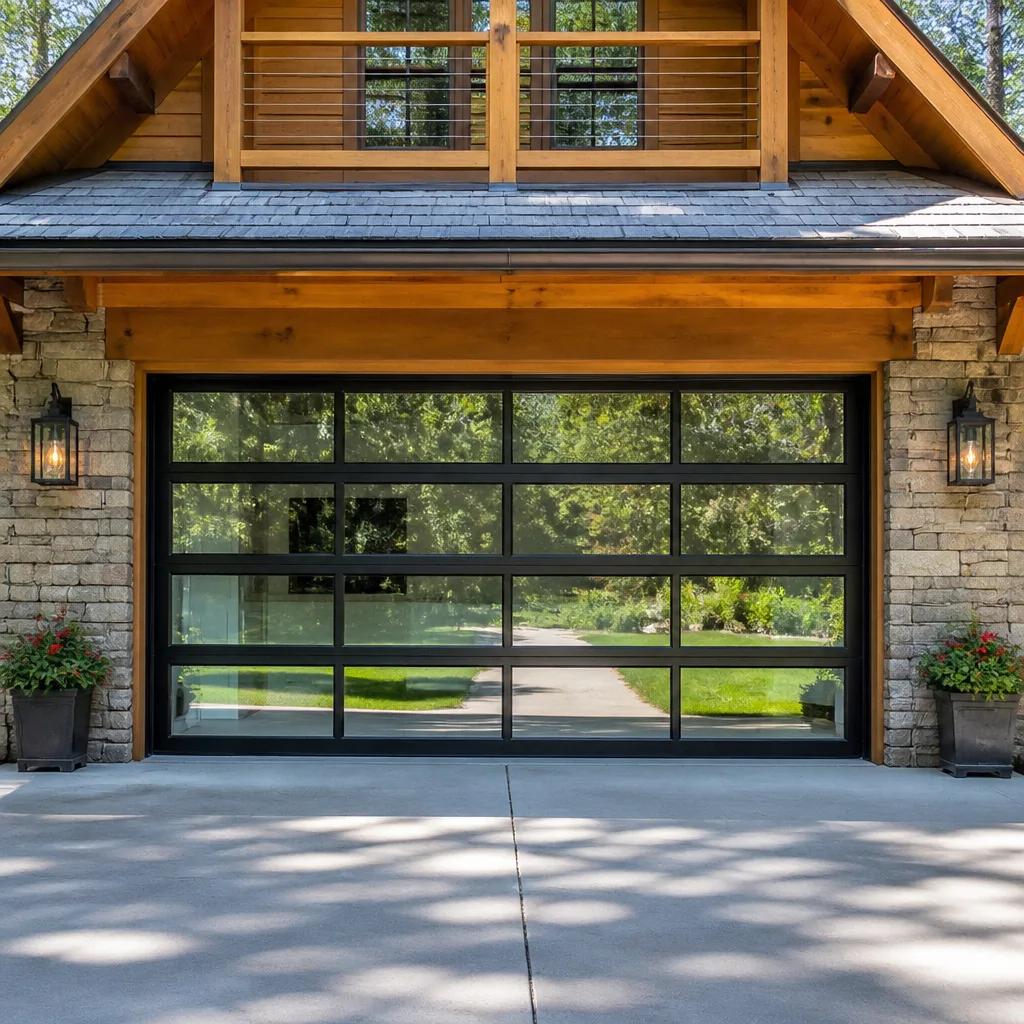 Full-view glass
 LiftMaster openers
 Chamberlain openers
Full 25-point door and opener safety check with every visit - springs, cables, rollers, tracks, and your LiftMaster or Chamberlain opener included
You get a price before we start. It does not change when the pro arrives.
Get your free estimateGarage Door Repair Troubleshooting in Port St. Lucie: Common Problems and How to Fix Them
A door that works fine in January and binds every August isn’t broken. It’s reacting to Port St. Lucie’s humidity swing, and reaching for a wrench to tighten the tracks will usually make it worse. That single misunderstanding sits behind a huge share of the door trouble we get called about here, and it’s the reason national troubleshooting guides miss the mark so often. They’re written for a climate that holds its shape. Ours doesn’t.
This guide walks through the problems Port St. Lucie homeowners actually report, how to tell one cause from another, which checks are safe to run yourself, and the exact point where touching the hardware becomes genuinely dangerous. You’ll get direct answers, not guesswork.
Quick Answer
Most garage door problems in Port St. Lucie come down to a short list: humidity-swollen tracks that mimic real misalignment, corrosion on springs and cables, and spring fatigue that builds faster because doors get cycled repeatedly around storm season. Diagnose the symptom against those three before you touch anything. If the door won’t open, the spring is broken, the cables are slack, or the door feels heavy in your hands, stop and call a trained technician.
Styles & brands we work with
- Raised-panel steel
- Carriage house
- Modern flush
- Full-view glass
- LiftMaster openers
- Chamberlain openers
Table of Contents
- Why Your Door Binds Every August: Humidity vs. Real Misalignment
- Corrosion on Springs and Cables: Early Rust vs. Terminal Wear
- How Storm-Season Over-Cycling Wears Out Springs
- A Door That Reverses: Sensor Problem or Warped Bottom Seal?
- When the Opener Is the Problem, Not the Door
- What You Can Safely Check Yourself
- Where DIY Ends and a Technician Begins
- Repair or Replace? How to Decide
Why Your Door Binds Every August: Humidity vs. Real Misalignment
Port St. Lucie’s wet season pushes humidity into everything, and a steel or aluminum door, its tracks, and the framing around them don’t expand at the same rate. That uneven movement can make the door drag, scrape, or stop partway. It looks exactly like a bent track. It isn’t.
Here’s the test that separates the two. Look at the tracks along the full travel of the door, not just the section near the floor. A real alignment problem shows as a visible kink, a dent from impact, or a track that’s pulled away from the wall along part of its length. Seasonal binding shows none of that. The tracks look straight and the door still drags, often in the same spot, and often only when the weather turns heavy.
Run the door by hand, with the opener disconnected if you can do it safely, and feel where the resistance starts. Then check these:
- Consistent drag in one spot, every time: likely a mechanical issue worth a closer look.
- Drag that comes and goes with the weather: humidity binding, not a bent track.
- Loud squeal or grinding along the whole run: rollers and hinges that need attention.
- A door that closes and won’t reopen without a nudge: could be either, so don’t assume.
The mistake we see most is someone tightening every track bolt to “straighten things out.” If the tracks were square to begin with, that tightening pulls them out of plumb and turns a harmless humidity issue into a real alignment job. If your door is binding seasonally, the right move for garage door repair is a proper inspection rather than a quick tighten. A door that’s adjusted correctly should run the same in a dry January and a soggy August.
One more note on the door itself: a Clopay steel panel door and a wood-composite Amarr door don’t behave the same way in humidity. The steel door expands and contracts at its own rate; a wood-composite door can swell slightly at the panel edges. Knowing which door you have tells you which seasonal behavior is normal and which isn’t.
Corrosion on Springs and Cables: Early Rust vs. Terminal Wear
Rust on a torsion spring is normal here, and not all of it means replace the spring. The distinction that matters is surface bloom versus deep pitting, and whether the coils have lost tension or the cables have started to fray.
Here’s how to read what you’re seeing:
- Surface rust (light orange film): the outer finish is breaking down, the spring may still have years in it. Worth watching.
- Pitting (crusty, flaking spots you can feel): the metal is losing cross-section. Spring replacement moves up the priority list.
- Cables with broken strands or a frayed “fuzz”: stop using the door. This is a real hazard.
- Rust bleeding down the cable track or onto the wall: the cable itself is likely far enough gone that it should be replaced as a pair.
Why does Port St. Lucie see so much of this? The indoor air and the air just inside the garage door opening are always fighting each other on moisture, and the springs sit right where that fight happens. The door goes up, the humid outside air comes in, the door goes down, and the metal holds a little of that moisture. Over a couple of seasons, that’s enough to start the corrosion process on any steel spring.
A common misjudgment we get is the homeowner who sprays a rust inhibitor liberally on a spring and calls it done. That can slow things down, but it doesn’t restore a spring that’s already lost tension. And heavy grease on a torsion spring isn’t a fix either, because it traps dirt right against the coils. If you’re not sure where your springs are on the early-to-terminal scale, a technician can measure the spring’s coils, read the wear, and tell you plainly. That’s part of what Tundra Garage Door Repair checks on a standard service call.
How Storm-Season Over-Cycling Wears Out Springs
Every time your door goes up and down, the springs take one cycle of load. The spring’s total cycle life is fixed, so the question isn’t whether cycling wears it out, it’s how fast. And in Port St. Lucie, storm prep can add a lot of cycles in a very short window.
Think about what actually happens when a system approaches. The door goes up so you can pull the car in, or so it’s up for wind and rain that isn’t coming in through the opening. It goes down because the forecast changed. It goes up again an hour later. It goes down when the system passes, and up again to check the yard. Multiply that across a few systems in a single season, and the door can see the cycles of several ordinary weeks in the span of a couple of days.
Two things we watch when a homeowner describes a door that “suddenly” failed in storm season:
- Spring cycle count. A spring rated for a certain number of cycles doesn’t care how old it is. It cares how many times it’s been used. Storm cycling collapses that count into a short window.
- Opener motor strain. LiftMaster and Chamberlain openers will run a door that’s riding slightly heavier than they like, but they overheat, stutter, or reverse if the door’s drag (from spring fatigue or rail issues) builds up past what the motor can handle.
We’re not suggesting you skip storm prep. We are suggesting that after a busy season, it’s worth having the door checked. The time to find out your spring is on its last legs is not at 9pm before a system makes landfall, with your car outside. A quick pre-season inspection on a Genie or LiftMaster system typically tells you where you stand on spring life, roller condition, and balance. If your door is opening and closing heavily, that’s the signal to schedule a look before the next system comes up the coast.
A Door That Reverses: Sensor Problem or Warped Bottom Seal?
A door that goes down, stops, and comes back up is telling you it thinks something’s in the way. In Port St. Lucie, that can mean one of two very different things, and they need different fixes.
Sensor issue: the safety eye at the bottom of the track is misaligned, dirty, or blocked. Sun glare on the lens is a classic culprit, and so is a spider web or lawn debris on the lens. Test it directly: place a box or object in the door’s path and press close. If the door reverses, the sensor circuit is probably working. Then check that both eyes are facing each other and lit. If one is dark or flickering, alignment or a dirty lens is a likely cause.
Warped bottom seal: the rubber seal along the bottom edge of the door warps and bows from sun exposure, and a bowed edge can throw the closing door out of level enough to trip the opener’s reversal. You can see this one yourself. Look along the bottom edge in full sunlight and see whether the seal sits flat or has a wave to it. A door that closes fine in the morning and reverses in the afternoon is telling you the heat is the factor.
The tricky part is that a warped seal can cause the door to reverse in a way that mimics a sensor problem, so a homeowner will clean the sensor lens five times and never look at the seal. If the door is a tinted-glass or dark-finished Clopay that gets direct sun, the bottom seal takes a beating. If it’s a lighter door, the seal might last longer than the sensor alignment will.
Whichever cause you land on, if the door is a Chamberlain or Craftsman opener with a smart-tuning feature, it can be telling you the reversal is force-related rather than sensor-related. That’s a detail worth knowing before you replace a sensor that wasn’t the problem. Our garage door opener repair appointments start by isolating the sensor from the door itself, so you’re not paying to replace a working part.
When the Opener Is the Problem, Not the Door
Half the calls we get that sound like door problems turn out to be opener problems, and the tell is usually in how the door fails. If it stops partway, hums without moving, or works from the wall button but not the remote, the door hardware is often fine and the opener is the culprit. Here’s how to sort it out:
- Works from the wall button but not the remote: remote pairing, battery, or the receiver. Not a door problem.
- Humming without moving: the motor is trying but the drive isn’t. Could be a stripped gear, a snapped belt, or a door that’s too heavy to move. That last one points back to the door and springs.
- Stops at the same point every time: often a limit setting or a door balance issue, not a motor failure.
- Works sometimes, not others: loose wiring, a failing logic board, or an obstruction sensor that’s only sometimes blocked.
The smart-connected openers, most commonly LiftMaster and Chamberlain with their Wi-Fi features, add a whole category of “it’s not working” that has nothing to do with the door at all: firmware, router, and app-side issues. Our technicians have up to 12 years of experience and carry that knowledge into the electronics side of the diagnosis, not just the mechanical side, so a homeowner with a Wi-Fi opener isn’t sent to three different people to find out the door was fine and the app needed updating.
One thing to know about the brand you already own: most openers will report an error code by a pattern of flashes, and the exact number matters. A Craftsman and a Genie don’t use the same code set. Before you call, note how many times the light flashes and in what pattern. That single detail can cut the diagnostic time considerably.
What You Can Safely Check Yourself
There’s a real list of things a homeowner can check without risk, and using it correctly saves time and money. This is the list of checks that involve looking, listening, and pressing a button, and nothing that involves loosening, tightening, or reaching into the door mechanism.
- Listen for what changed. A new squeak, a grind, a hesitation at the same point – note it. “It started Tuesday and it’s worse in the rain” is useful information.
- Test the safety reversal. Place an object in the door’s path and press close. The door should reverse. If it doesn’t, stop using the door and call.
- Check the sensor eyes. Look along both sides of the bottom of the track and confirm both lights are on and facing each other. Clean the lenses if they’re dusty.
- Inspect what you can see from the ground. Look for obvious bent tracks, hanging cables, a visible gap at the bottom edge, or a bottom seal that’s curling. Don’t touch, just look.
- Check the opener’s indicator light pattern. Note the number and rhythm of flashes. That’s diagnostic gold.
- Check the remotes and the wall button. If the door moves from one but not the other, you’ve narrowed the problem without touching a single piece of hardware.
If you’re on a raised ranch or townhome with a low garage ceiling and a torsion spring assembly overhead, keep one thing in mind: don’t reach up toward it, even to “check” it by hand. The spring is under load in a way that a visual check doesn’t reveal. Look from a safe distance and leave the touch test to a technician.
Where DIY Ends and a Technician Begins
Garage door springs and cables are under high tension, and the parts that fail catastrophically are the parts you can’t see most of the time. This is the clearest boundary in the whole troubleshooting process: if the door involves a broken spring, a slack or frayed cable, or a door that’s remarkably heavy (which often means a spring has failed and you’re feeling the door’s full weight), don’t touch it.
A torsion spring under load can release violently if the wrong hardware is removed, and cable replacement, spring replacement, and track alignment all fall in that same danger zone. A trained technician knows the tool for the specific job and how to take the load off safely before touching anything. We’d rather you put the tools down and leave the door shut than save a service call and risk an injury. If you suspect a spring is compromised, keep the car out of the garage, keep the door down, and call a professional. That’s true for a Raynor and a Wayne Dalton, for a new door and an older one, and for any door that feels unreasonably heavy when you pull the manual release.
Repair or Replace? How to Decide
Repair is the right call when the problem is narrow: one spring, one sensor, a worn seal, a roller replacement. Replace when the problems stack up, when the panels are legitimately damaged, or when the door is the original unit from decades ago and you’re facing a spring, a panel, and an opener all at once. Here’s how to think it through:
- Age of the door system: a door that’s on its second or third spring and shows panel fatigue is likely a candidate for replacement.
- Frequency of repairs: three repairs in a year is a signal that the whole system is moving toward the end of its life.
- Opener age and capability: if the opener is the oldest part of the system and the door is sound, a new opener is often the bigger win.
- Panel damage: a single Amarr or Clopay panel can often be replaced to match, which is usually far cheaper than a full door. Go look at whether the panel is still available before assuming you need a new one.
- Your plans for the home: if you’re in Port St. Lucie for the long haul, a replacement door with a modern spring system and a smart opener changes the repair math considerably.
If you’re not sure where you land, ask for the straight version of the answer rather than the one that sells the most. A good technician will tell you when a door is a fix and when it’s a replace. That’s a conversation worth having in person, not over the phone.
Common Mistakes to Avoid
- Tightening tracks without checking them first. This is the single biggest mistake we see in Port St. Lucie. If the tracks are square, tightening them pulls them out of alignment and turns a seasonal humidity issue into a real repair.
- Greasing a torsion spring. Heavy lubricant traps dirt against the coils and can accelerate the wear the homeowner was trying to prevent. It also makes it harder to see fresh rust.
- Blaming the sensor for every reversal. A warped bottom seal from sun exposure causes the same symptom. Cleaning the sensor lens a fifth time won’t fix a bowed seal.
- Letting a door “wait until next season.” A spring that’s down to its last cycles doesn’t get better, and in storm season you find out at the worst possible moment.
- Replacing an opener to fix a door problem. A heavy door will burn out every new opener you put on it until the underlying spring or balance issue is handled.
- Reaching for the spring by hand. This is the mistake with the worst possible outcome. Never touch a torsion spring, a slack cable, or any loaded part of the door hardware. That’s a technician’s job.
- Skipping the pre-season check. A few minutes of inspection before the wet season or before an approaching system can catch a weak spring before it fails under pressure.
See the difference
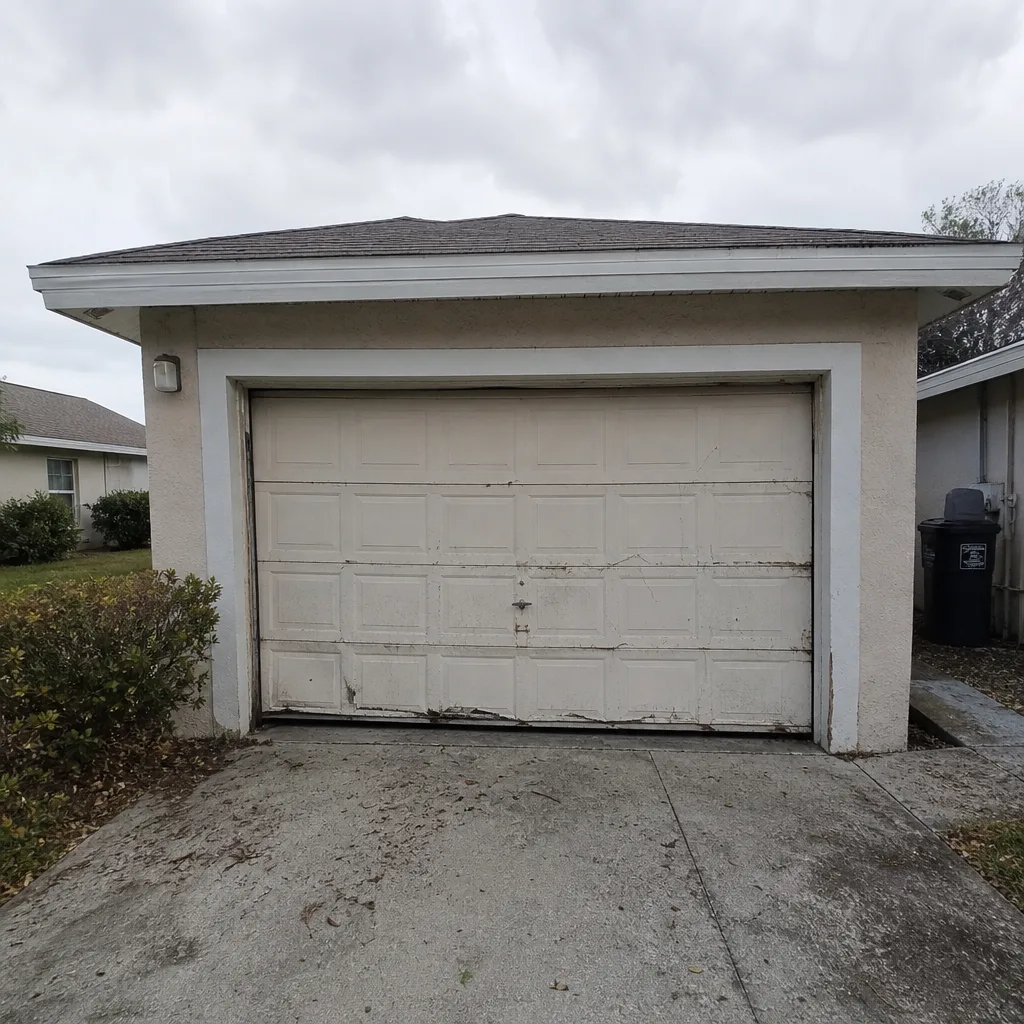 Before
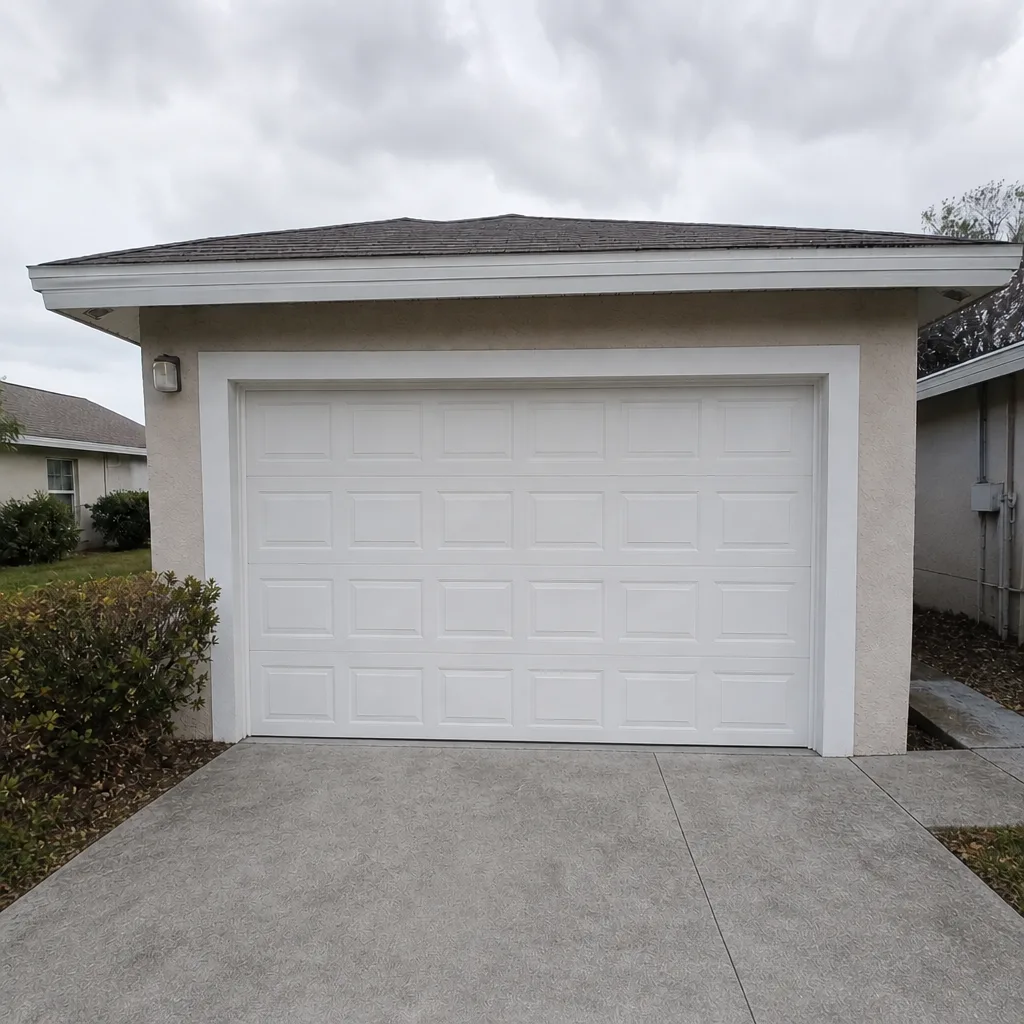 After
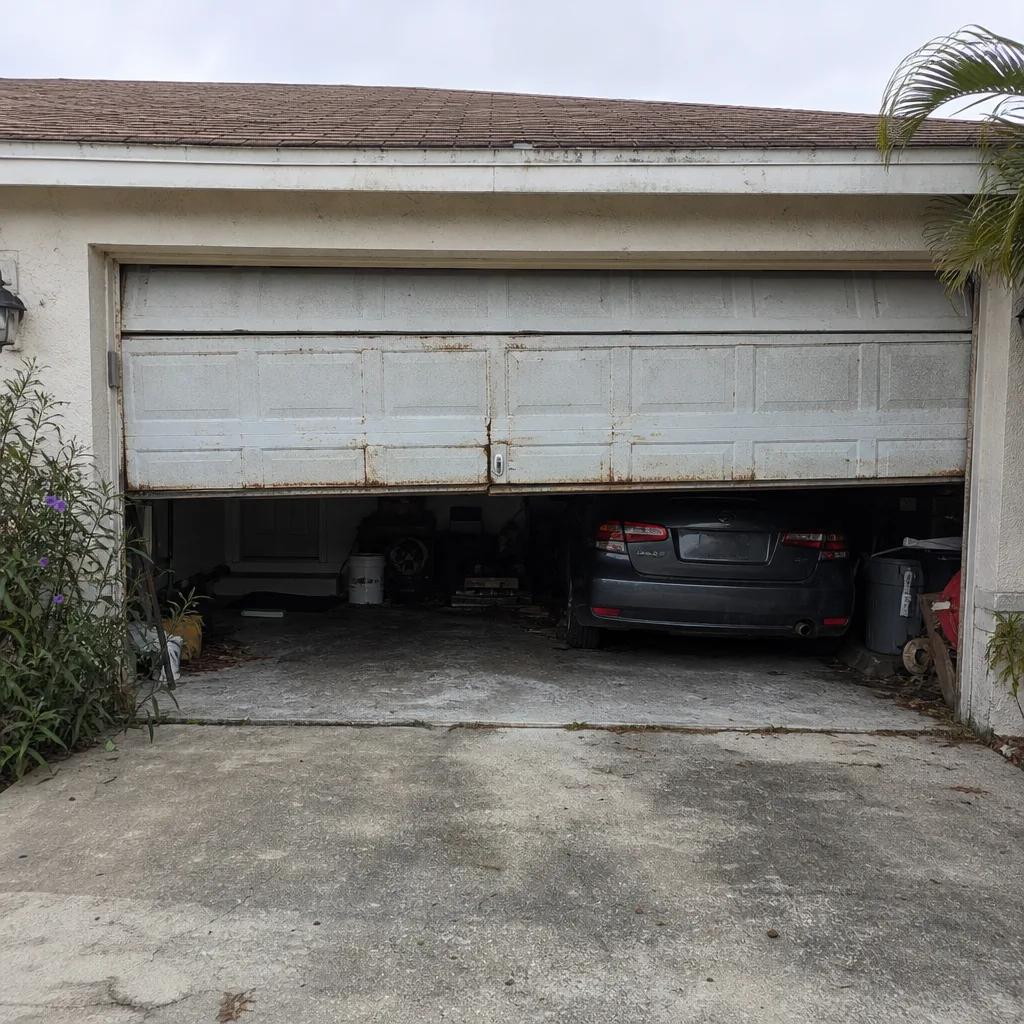 Before
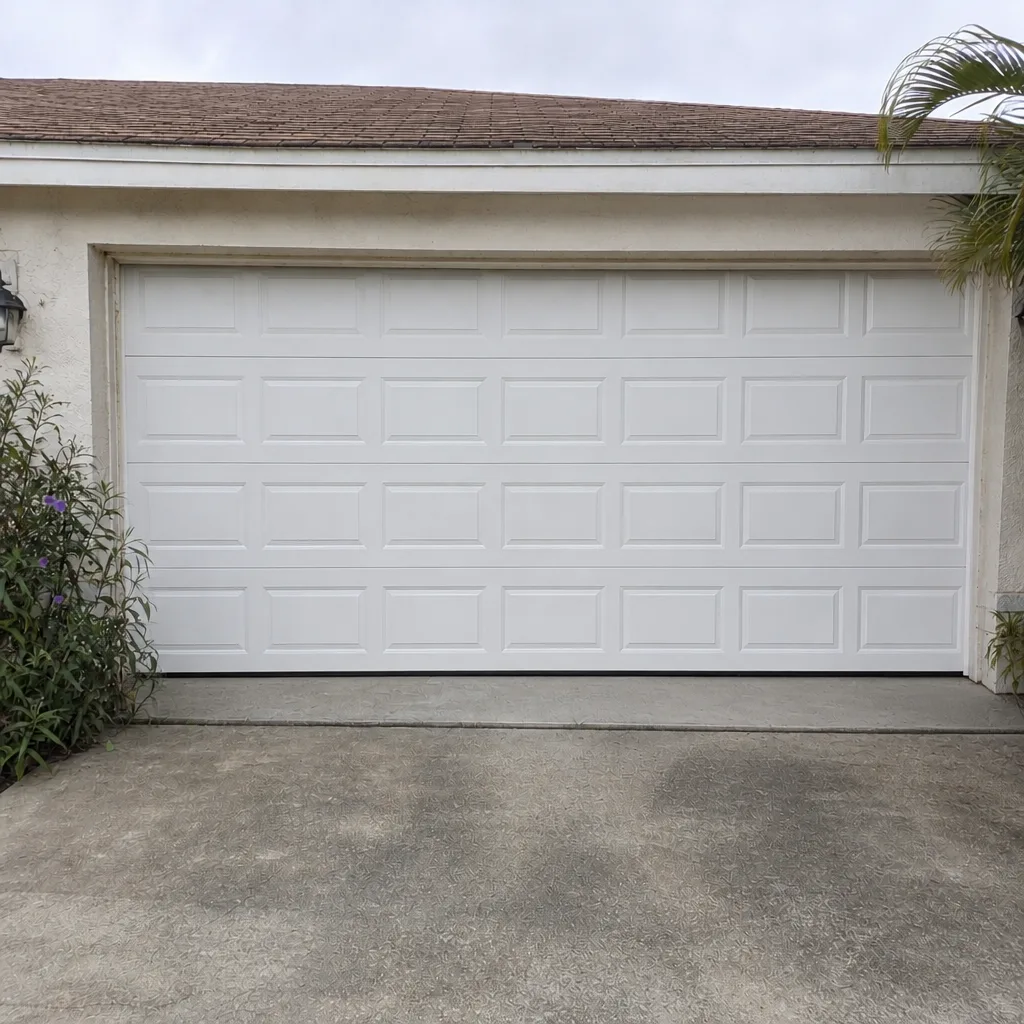 After
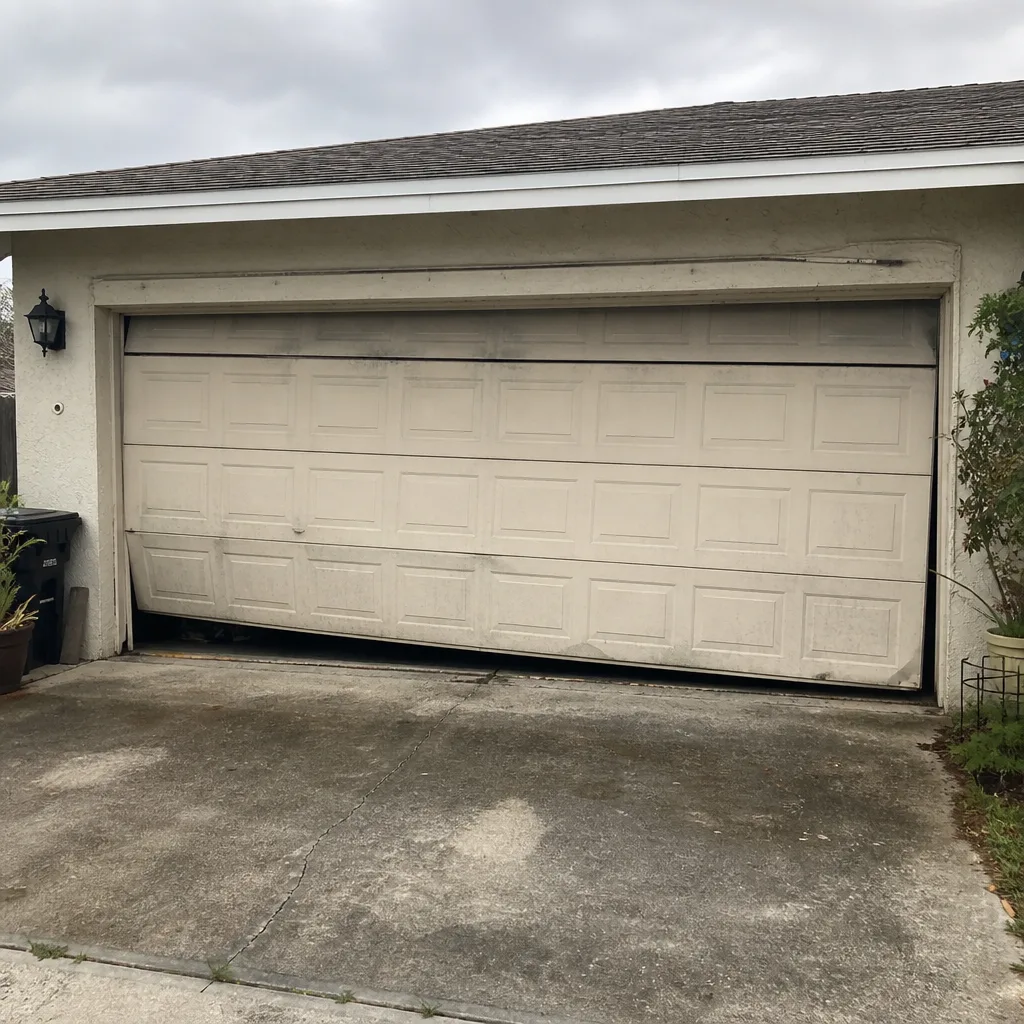 Before
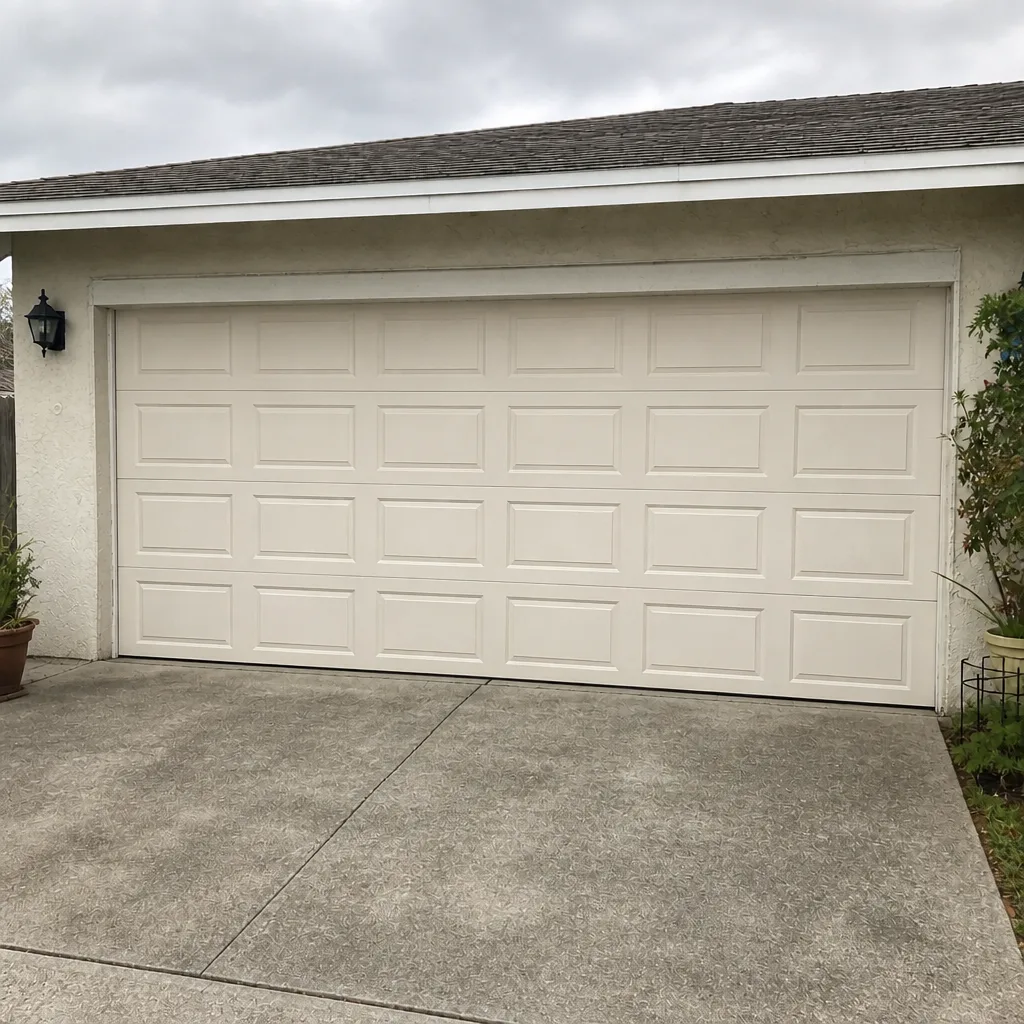 After
When to Call a Professional
Call when the door won’t open or close, when the spring has visibly failed or the cables look slack, when the door feels far heavier than it should in your hands, or when the opener hums without moving the door. Call when a reversing door persists after you’ve cleaned the sensor lenses and checked the bottom seal. Call if anything about the door makes you uneasy once you start to look at it closely. Those are the cases where the diagnosis has to come before the tools. Tundra Garage Door Repair offers free estimates in Port St. Lucie and can work on the brand you already own, whether it’s a LiftMaster opener, a Genie system, or a Clopay or Amarr door. Call (833) 847-0310. We answer 24/7. Fast dispatch from 7am to 7pm, Sunday through Friday. The price is quoted and agreed before any work starts.
Frequently Asked Questions
Humidity causes the door, the tracks, and the framing to expand at slightly different rates, which produces drag that looks like misalignment but isn’t. The key test is that the tracks look straight and there’s no visible kink; if the drag comes and goes with the weather, it’s seasonal binding rather than a worn track. Touching the track bolts on a door that was square to begin with usually makes things worse, so get it inspected instead. Call (833) 847-0310 for an exact quote; estimates are free.
Surface bloom (light orange rust) means the finish is breaking down but the spring may still have life. Pitting, flaking, or a spring that’s lost tension is terminal wear and needs replacement. A sagging or visibly separated spring is an immediate stop-use situation. Don’t reach into a torsion spring to check it by hand; call a technician. Call (833) 847-0310 for an exact quote; estimates are free.
Sometimes. A misaligned or dirty safety sensor causes this, and so does a warped bottom seal from sun exposure. Test by placing an object in the path; if the door reverses, the sensor is probably fine and the seal is the thing to check next. If cleaning the sensor lenses doesn’t fix it, call for a proper diagnosis. Call (833) 847-0310 for an exact quote; estimates are free.
Same-day service is often available for repair and opener issues in Port St. Lucie. We answer 24/7, fast dispatch from 7am to 7pm, Sunday through Friday, closed Saturday. Call (833) 847-0310 for an exact quote; estimates are free.
No. The written estimate is the price, and the price is quoted and agreed before any work starts. If a technician finds something that changes the scope, you’ll be told before the extra work happens. Call (833) 847-0310 for an exact quote; estimates are free.
Yes. The technicians who do the work are state-licensed, insured, and bonded, and our technicians have up to 12 years of experience across mechanical door repairs and the electronic opener systems from LiftMaster, Chamberlain, Genie, Craftsman, and the other major brands. Call (833) 847-0310 for an exact quote; estimates are free.
The Bottom Line
The door symptoms you see in Port St. Lucie are often not the problem the national guides describe. Seasonal binding, corrosion on springs and cables, and storm-season over-cycling explain most of what comes through the door. Diagnose against those three before you reach for a tool, and know where to stop: springs and cables are the safety boundary. The rest – sensors, seals, openers, remotes – can be checked safely from the ground. When you’re ready, call Tundra Garage Door Repair at (833) 847-0310 for a free estimate in Port St. Lucie. We answer 24/7. Fast dispatch from 7am to 7pm, Sunday through Friday.
Written by the team at Tundra Garage Door Repair.