
Last updated November 15, 2026
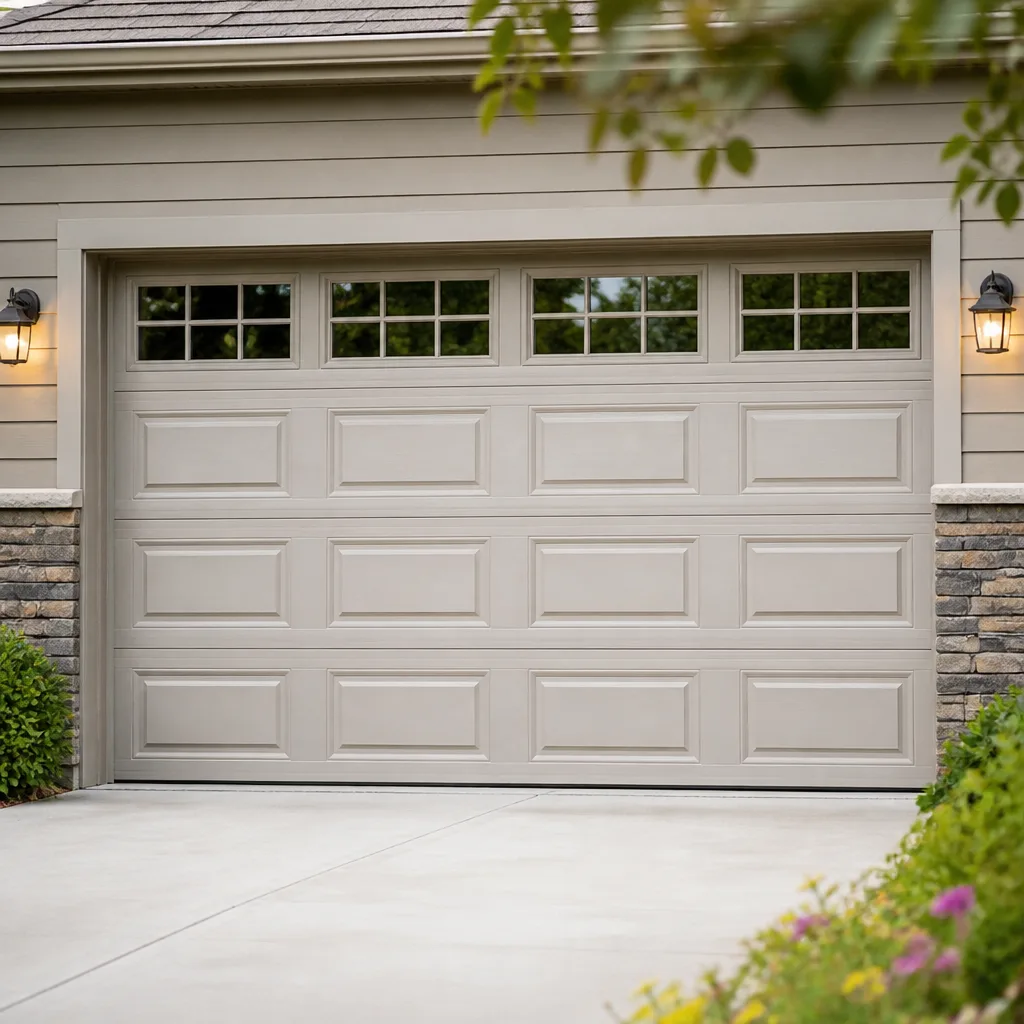 Raised-panel steel
 Carriage house
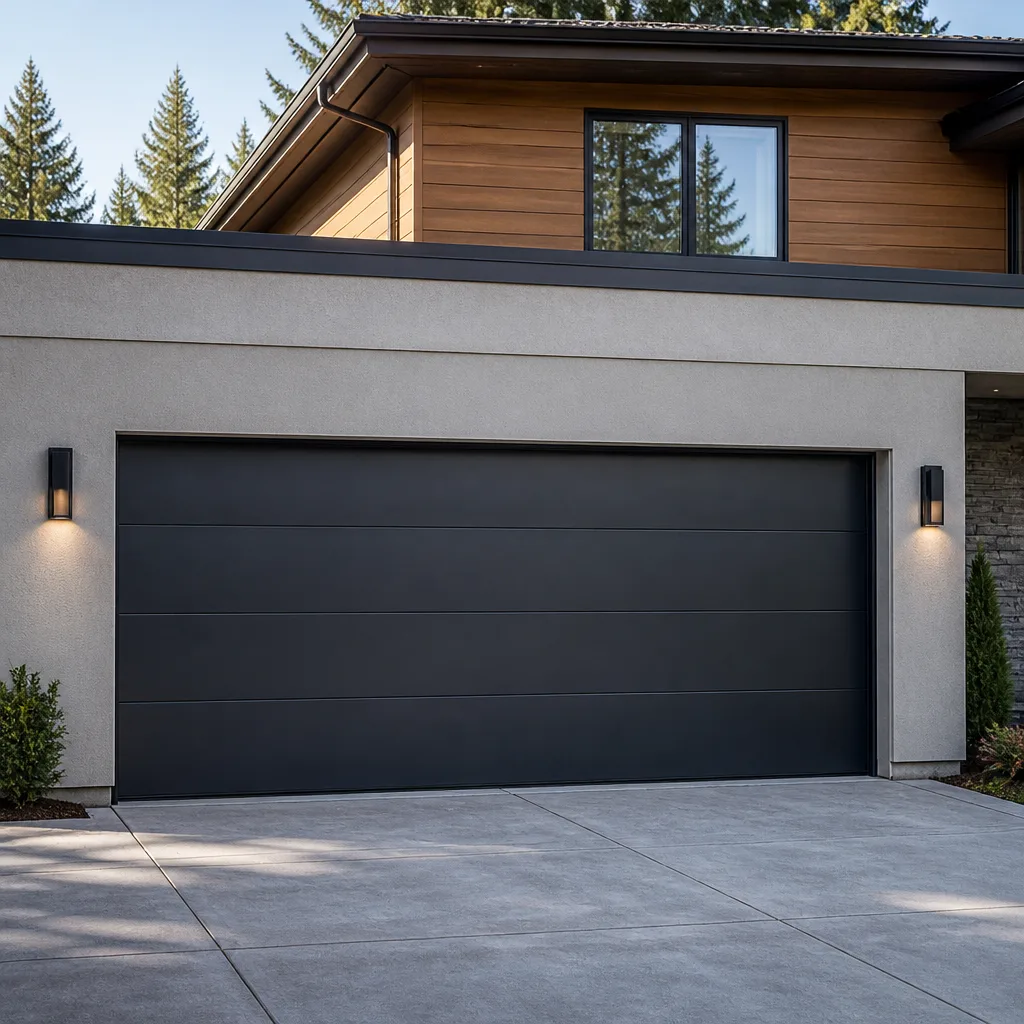 Modern flush
 Full-view glass
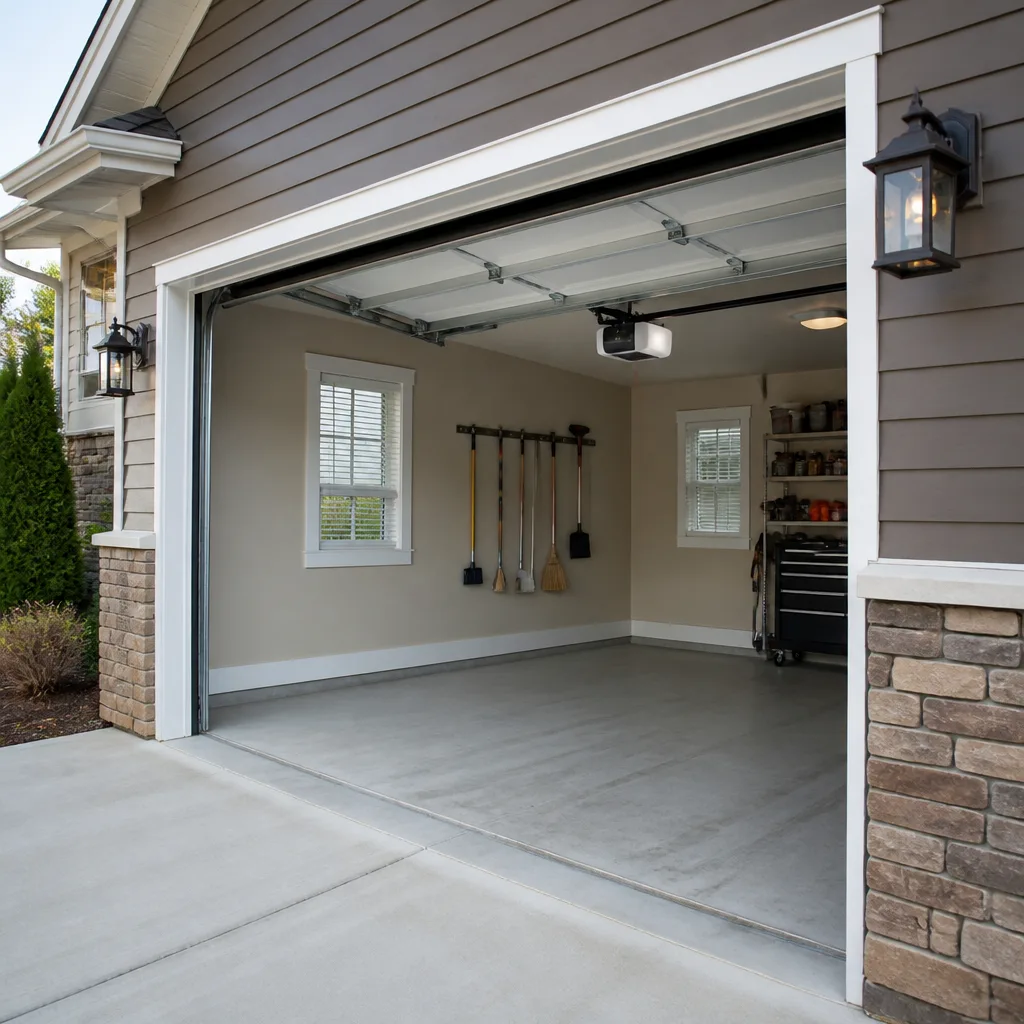 LiftMaster openers
 Chamberlain openers
Full 25-point door and opener safety check with every visit - springs, cables, rollers, tracks, and your LiftMaster or Chamberlain opener included
You get a price before we start. It does not change when the pro arrives.
Get your free estimateGarage Door Repair Maintenance Checklist for Port St. Lucie Homeowners
Most garage door maintenance checklists were written for cold climates, and they show it. They talk about ice, road salt, and freeze damage that never happen in Port St. Lucie. Meanwhile, the things that actually wear out a garage door here in South Florida go almost unmentioned: heat that ages lubricant, humidity that creeps into every metal joint, and storm-season wind that works on the same hardware everyone ignores until it fails. We’ve seen doors that get “maintained” every year and still corrode at the bottom bracket because the checklist never told anyone to look there. This guide fixes that. Below is a maintenance routine built around how garage doors actually fail in Port St. Lucie, with the tasks, the timing, the right materials, and the warning signs that mean it’s time to stop maintaining and start repairing.
Quick Answer
A garage door maintenance routine in Port St. Lucie should run at least twice a year, not once, because heat and humidity wear components faster than in dry climates. Focus on four things: keeping metal joints and the bottom bracket rust-free, using silicone-based lubricant instead of WD-40, testing the auto-reverse feature and re-adjusting opener sensitivity as motors run hotter in summer, and checking track alignment, weather seals, and opener electronics after any strong storm. If any hardware is bent, cracked, or missing a cable tension, that’s a repair call, not a maintenance task.
Styles & brands we work with
- Raised-panel steel
- Carriage house
- Modern flush
- Full-view glass
- LiftMaster openers
- Chamberlain openers
Table of Contents
- Why a Port St. Lucie Maintenance Checklist Looks Different
- The Monthly Rust Check: What to Look For
- Lubrication: Why Silicone Beats WD-40 Here
- Testing the Auto-Reverse and Re-Setting Sensitivity
- The Post-Storm Checklist After Atlantic Hurricane Season
- How Often Each Task Really Needs Doing in Port St. Lucie
- Balance, Alignment, and Hardware Checks
- Common Mistakes to Avoid
- When to Call a Professional
Why a Port St. Lucie Maintenance Checklist Looks Different
Garage doors age according to the climate they sit in. In a dry, cold part of the country, the dominant wear is thermal and mechanical: components freeze, thaw, and flex. In Port St. Lucie, the dominant wear is moisture and heat. Both of those push on the same parts in ways a northern checklist never accounts for.
Humidity is relentless here. It reaches into every hinge pin, roller stem, and bolt thread and slowly does its work. That process speeds up at the base of the door, where rain splash, lawn watering, and morning dew collect and stay. Heat is the other half. A garage facing the afternoon sun can get genuinely hot inside, and that heat breaks down lubricant faster than a moderate climate does. Motor housings get hot to the touch, thermal cutouts trip on older openers, and the tolerances inside an opener’s electronics drift.
Then there’s storm season. Atlantic hurricane season runs from June through November, and even when Port St. Lucie doesn’t take a direct hit, the region gets strong wind events, heavy rain, and power bumps that surge opener electronics. Panels flex, tracks move, and weather seals get pried open by wind. None of that shows up in a northern checklist.
The practical result is simple: tasks that are annual maintenance in a dry climate become semi-annual in Port St. Lucie, and a few tasks – like rust inspection and post-storm checks – move to the top of the list. If your door is a Clopay, Amarr, Wayne Dalton, or any other widely installed system, the maintenance principles are the same. The timing is what changes here.
Our technicians have up to 12 years of experience, and the pattern we see over and over is a door that’s mechanically fine but functionally failing from corrosion and drift. Both are preventable. All it takes is a routine built for the right climate.
The Monthly Rust Check: What to Look For
Rust is the single most important monthly inspection item in a Port St. Lucie garage. It’s also the one homeowners skip, largely because the critical spots are out of sight. The good news: a full rust check takes about five minutes once a month.
Work through the door methodically, top to bottom, and pay attention to these areas in particular:
- Hinges and hinge plates. Look for brown staining around the hinge screws and along the seams where steel plates meet steel.
- Roller stems and bearings. The roller itself is usually nylon or steel; the stem it rides on is metal and rusts. A stiff, squeaky roller often has a rusty stem, not a dry one.
- Track bolts. Every track bolt and bracket bolt is a place for corrosion to start.
- The bottom bracket. This is the big one most people miss. The bottom bracket anchors the cable at the base of each side of the door, and it sits lowest, where water and moisture collect. Corrosion here is a genuine safety concern because the cable is under tension. If you see heavy rust, pitting, or a discolored cable end at the bracket, do not touch it yourself – have it looked at.
- Section seams and panel edges. Moisture collects along the seams between door sections, and rust starts there first.
The fix for surface rust is not a wire brush and paint. It’s an ounce of prevention: keep the joints lubricated (the next section), keep the bottom seal intact so water doesn’t reach the base of the door, and touch up any bare metal promptly. If rust has progressed to pitting or loose hardware, the part needs replacing rather than cleaning up – and that’s where a trained technician matters. Call (833) 847-0310 if you find anything on the bottom bracket or cable ends that looks wrong.
Lubrication: Why Silicone Beats WD-40 Here
The most common garage door maintenance mistake we see in Port St. Lucie is spraying WD-40 on every moving part once a year. It feels productive, and it makes the door quieter for a couple of weeks. It also does active harm here.
WD-40 is a light penetrating oil and water displacer, not a long-term lubricant. It evaporates, it attracts dust, and it becomes gummy over time. In high humidity, a gummy, dust-collecting film is a net negative: it holds moisture against the metal it was meant to protect. In a dry climate, the consequences are mild. Here, they add up.
Silicone-based spray lubricant is the better choice for a high-humidity garage. It leaves a dry film rather than a wet one, it doesn’t collect dust or grime, it doesn’t gum up, and it doesn’t break down under heat the way oil-based products do. It’s also safe on the nylon rollers and seals that most doors use now. Lithium grease is a reasonable option for the track and high-friction moving parts, but silicone is the simplest all-purpose choice and the one we recommend for homeowners.
Where to apply it – and this is a short list, not the whole door:
- Hinge pivot points (just the pin, not the whole hinge plate).
- Roller stems and bearings, spray the stem where it meets the hinge bracket.
- The torsion spring, a light coat, not a drenching.
- The bearing plates at each end of the torsion shaft.
- The opener rail and the carriage that slides along it.
What not to lubricate: the door’s aluminum or steel tracks (clean them with a damp cloth instead), the outside of the panels, and the weather seal itself. Grease on the track attracts debris and can make rollers slip. The spring, cables, and bottom bracket under tension should only be serviced by a trained professional – springs can cause serious injury, and we don’t recommend homeowners touch them. If lubrication doesn’t quiet a door, the noise is coming from a worn part that needs replacing, and that’s a repair instead of a maintenance call.
Testing the Auto-Reverse and Re-Setting Sensitivity
Every garage door opener manufactured since 1993 has two safety systems: a mechanical auto-reverse that kicks in when the door meets resistance, and a photo-eye beam near the floor that reverses the door if something breaks the beam. Both of them drift, and both drift more in Port St. Lucie’s heat. An opener motor that runs hot can trip its thermal protection and misread the force required to close, and an opener force setting that was correct in January may shut harder than it should in August.
Test both systems at least once a month. Each test takes about a minute.
- Stand clear, close the door, and open it fully.
- Photo-eye test: with the door open, pass a broom or a child’s toy through the path of the photo eyes at the base of each track. The opener’s light should flash or the door should refuse to close.
- Auto-reverse test: with the door open, place a 2×4 flat on the ground under the door, then press the close button. The door should strike the board and reverse immediately.
- If the door doesn’t reverse, or the photo-eye fails to stop it, stop using the opener and call for repair.
If the door reverses easily with a light touch, or closes too hard against the floor, the opener sensitivity needs adjustment. Where that adjustment lives depends on the brand and age of the opener – LiftMaster, Chamberlain, Genie, and Craftsman systems all handle it differently – and that’s where a technician familiar with the electronics saves time and avoids damage. A homeowner who adjusts blindly can make the opener close hard enough to be dangerous. Call (833) 847-0310 and we’ll set it correctly. Estimates are free, and we work on the opener you already own.
The Post-Storm Checklist After Atlantic Hurricane Season
Atlantic hurricane season runs from June through November in South Florida, and even a glancing storm leaves its mark on garage doors. What surprises most homeowners is that the damage is often subtle – a track out of alignment, a weather seal pried loose, an opener that’s fine until it’s called on to lift in a power surge. Run this checklist after any strong wind or heavy rain event, especially if the power flickered.
- Look at the tracks. With the door closed, step back and look at the vertical and horizontal tracks from the side. Bent, bowed, or out-of-square tracks will bind the door. Open and close the door slowly and listen for grinding or scraping – that’s a track problem.
- Check the door panels for lateral shift. Wind can push a door sideways on its hinges. Panels should line up squarely; a shifted panel or hinge that’s pulled loose is a repair.
- Inspect the weather seal at the bottom of the door. Heavy rain and wind pries seals loose, and a torn or detached bottom seal lets water into the garage and starts rust at the base of the door. Replace it if it’s loose or torn.
- Check the opener’s electronics. A power surge can scramble a control board, cause the opener’s travel limits to drift, or knock the photo-eyes out of communication. If the opener’s lights flash oddly, the door won’t respond to the remote, or it reverses for no reason, unplug the opener and have it looked at.
- Look up. Springs, cables, and the torsion shaft should be checked for anything obviously broken or hanging loose. Never touch cables or springs yourself – call instead.
If you’re in a Port St. Lucie neighborhood that took storm exposure and your door hasn’t been right since, this is exactly the situation where a repair call saves you from a bigger problem later. A warped track or a damaged seal looks small now and gets expensive fast.
How Often Each Task Really Needs Doing in Port St. Lucie
Here’s the practical answer to “how often should I do this?” This is where a Port St. Lucie maintenance routine separates from a generic national checklist. Remember: a task that’s annual in a dry climate is usually semi-annual here.
- Rust inspection: monthly. The bottom bracket, hinges, and roller stems are where corrosion starts.
- Lubrication with silicone: every three to six months. Heat breaks down lubricant faster than in cooler climates, and a semi-annual schedule keeps hinges and springs turning smoothly.
- Auto-reverse and photo-eye test: monthly, and again after any storm or power event.
- Openers with smart or Wi-Fi and MyQ connectivity: check the app’s fault log quarterly. Many systems log an obstruction or “reversal” event that the homeowner never notices.
- Weather-seal inspection: every month or two through hurricane season, and semi-annually otherwise.
- Track and hardware check: semi-annual, and after every strong storm.
- Professional service: once a year, or twice if your door gets heavy daily use. Our technicians check balance, springs, and roller wear that’s hard to catch by eye.
Consider also the condition of the door. Older doors and older openers need more attention, not less. A Craftsman opener or a Wayne Dalton door that’s a few years old may need a closer look at the bottom bracket and the opener’s sensitivity than a newer system does – and that’s a repair decision, not a maintenance one.
Balance, Alignment, and Hardware Checks
A garage door that’s out of balance is one of the most common causes of premature failure, and it’s easy to test yourself. With the door closed and the opener disconnected (most openers have a manual release cord), lift the door to about waist height and let it go. A balanced door stays put. A door that drifts down on its own is carrying too little spring tension; one that drifts up is carrying too much. Either way, spring tension needs a trained hand. Never adjust torsion springs yourself – the tension in a spring is enough to cause serious injury.
While the door is open and disconnected, check alignment. Run a level or a straight edge across the bottom of the door and look at the gap between the door’s edge and the track. If the door is visibly crooked, a hinge or a panel is pulled or a cable has stretched. The tracks should be straight and vertical; a track bent out of alignment will bind the door and can’t be straightened by the door’s own motion.
Hardware checks should take in the rollers, hinges, and the arm that connects the opener to the door’s opener bracket at the top. Loose bolts should be snugged up, but if any bolt spins freely or the bracket is cracked, stop and call. Worn rollers are the most common cause of a door that gets noisier and rougher every month; replacing them is inexpensive and makes the biggest single difference in how the door feels. If your garage door repair is beyond a quick tune-up, we can take a look – call (833) 847-0310 for a free estimate.
Common Mistakes to Avoid
- Using WD-40 as your main lubricant. It’s a water displacer, not a long-term lubricant. In Port St. Lucie humidity it becomes gummy and holds moisture against the metal, making rust and wear worse instead of better.
- Ignoring the bottom bracket. It’s the lowest point of the door, the most moisture-exposed part, and the anchor for cables under tension. Check it monthly, and never loosen it yourself.
- Lubricating the tracks. Grease and oil attract dust and grit, and a greasy track makes rollers slip and bind. Clean tracks with a damp cloth instead.
- Skipping the auto-reverse test. It’s a safety feature, and it drifts in summer heat. Test it monthly, and stop using the opener if it fails.
- Waiting a full year between maintenance checks. Heat and humidity accelerate wear. Semi-annual checks (or more) are the right cadence for Port St. Lucie conditions.
- Adjusting the opener force settings blindly. The photo-eye and auto-reverse sensitivity are on the opener for a reason. If you don’t know the adjustment for your brand – LiftMaster, Chamberlain, Genie, Craftsman, and older systems all differ – get a technician to set it correctly.
- Ignoring storm damage because the door still opens. A slightly bent track or a loosened seal will often work fine for months and then fail at the worst moment. Have the door checked after any strong storm.
See the difference
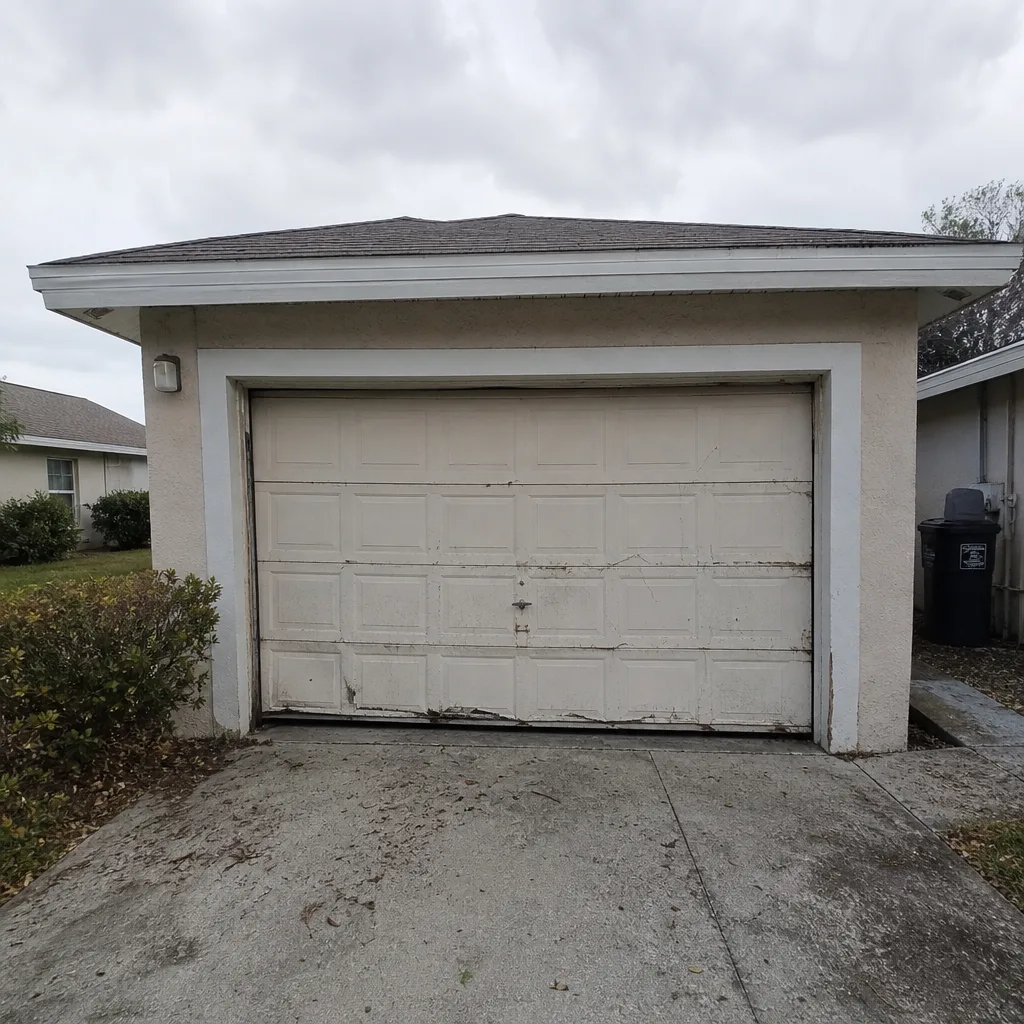 Before
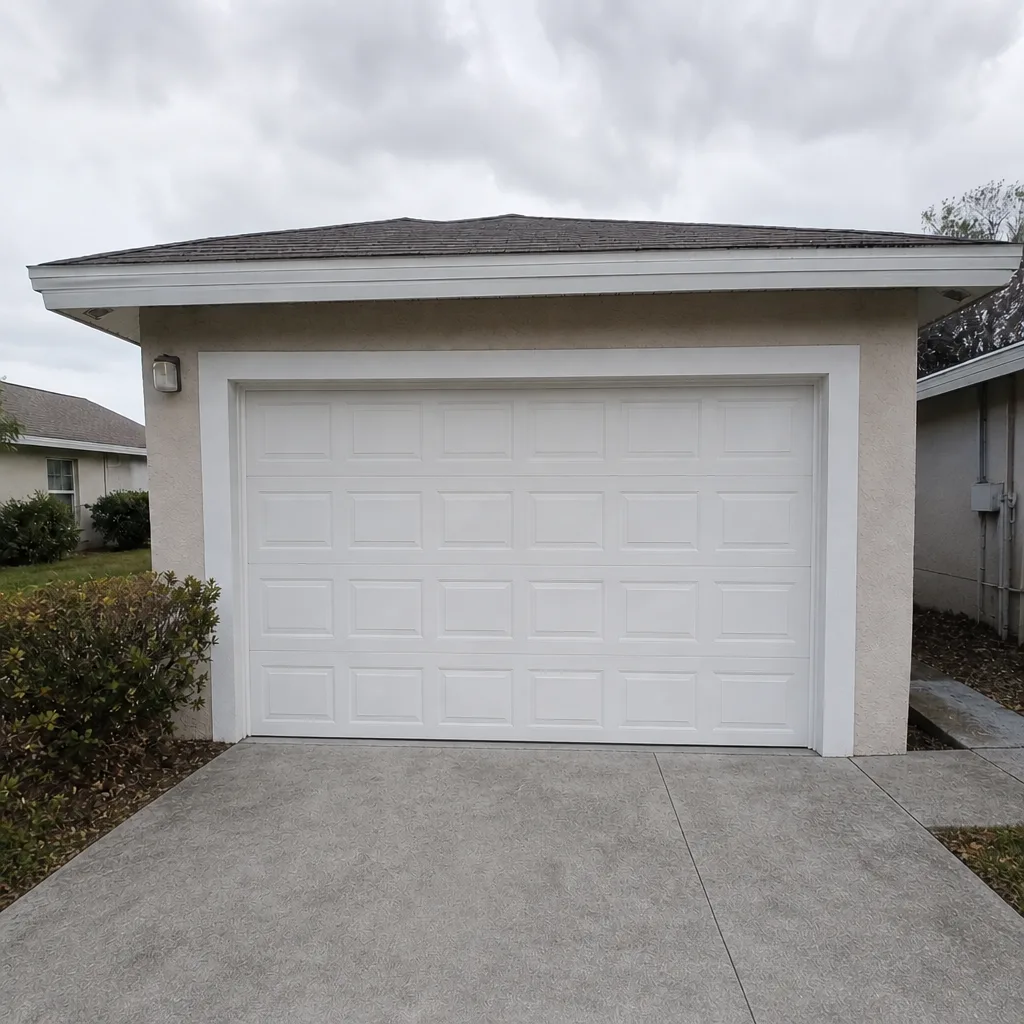 After
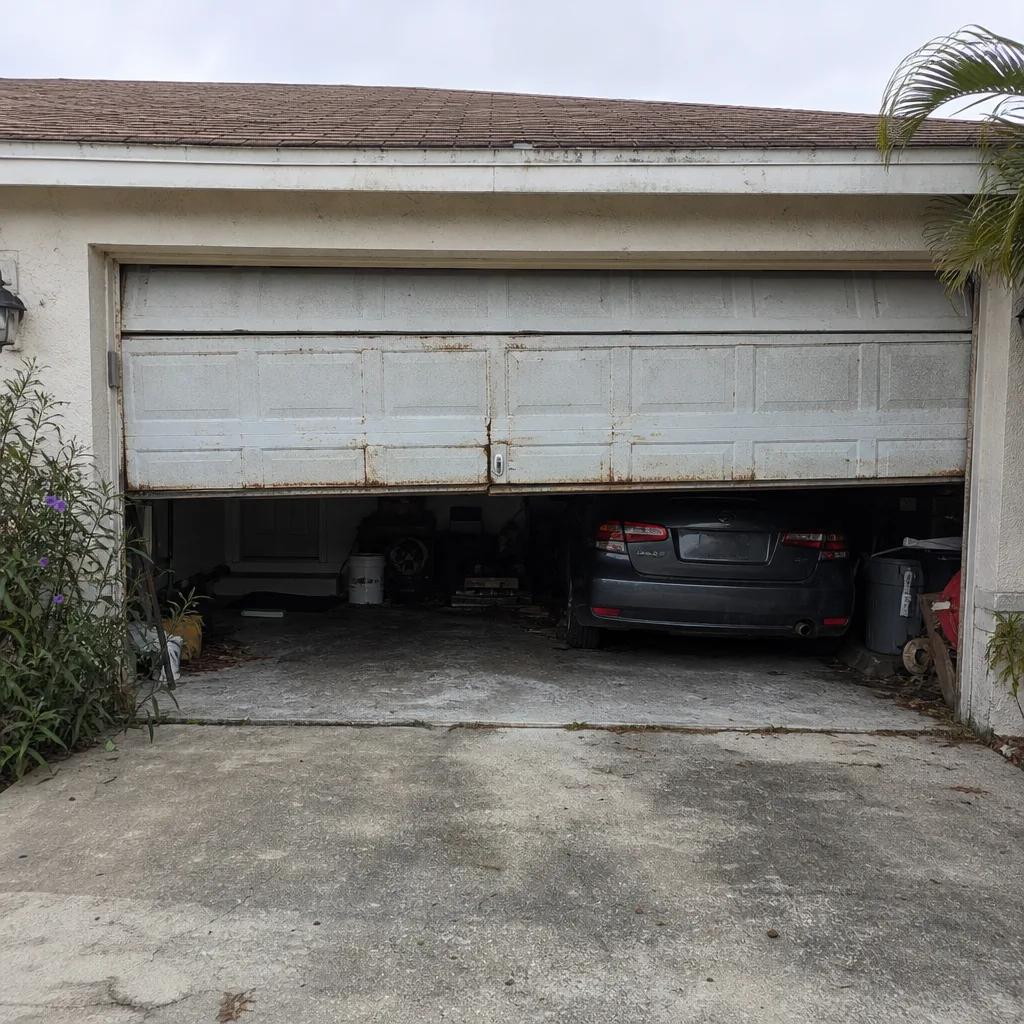 Before
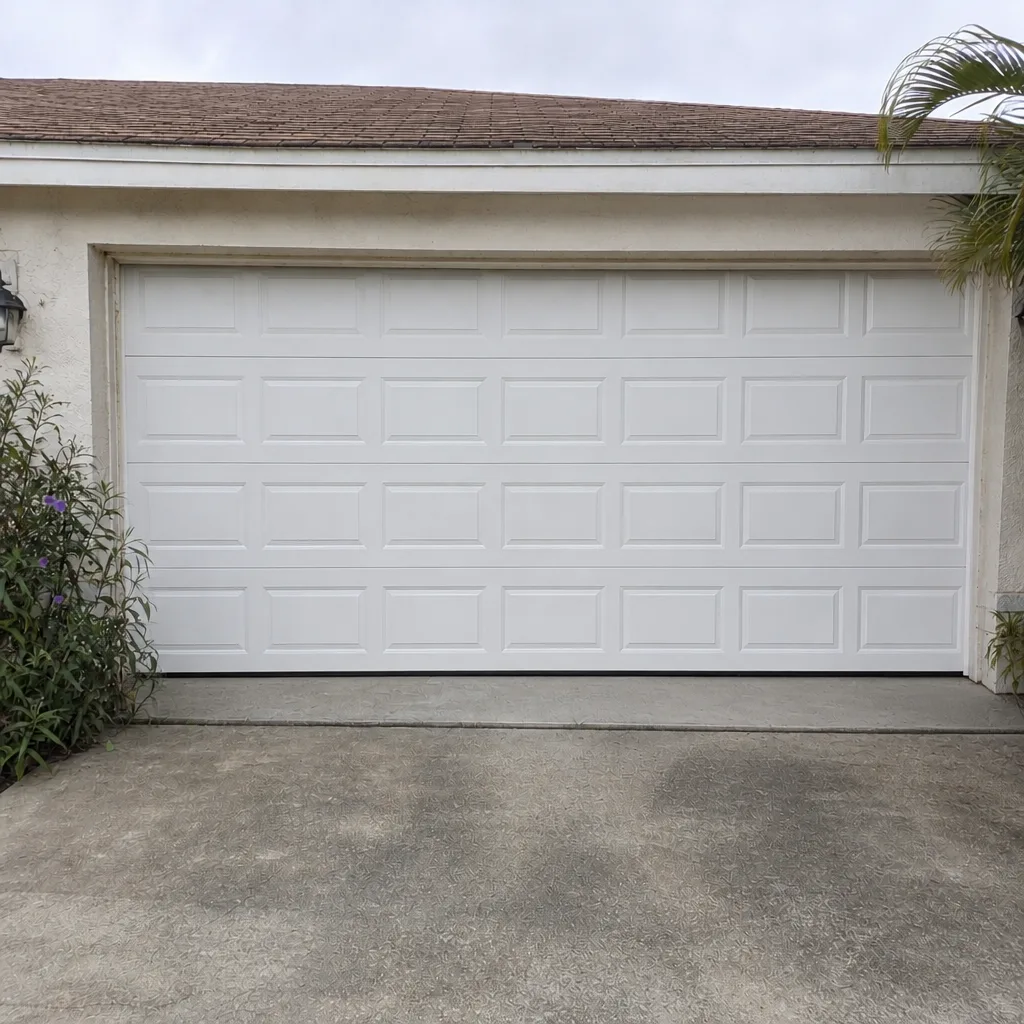 After
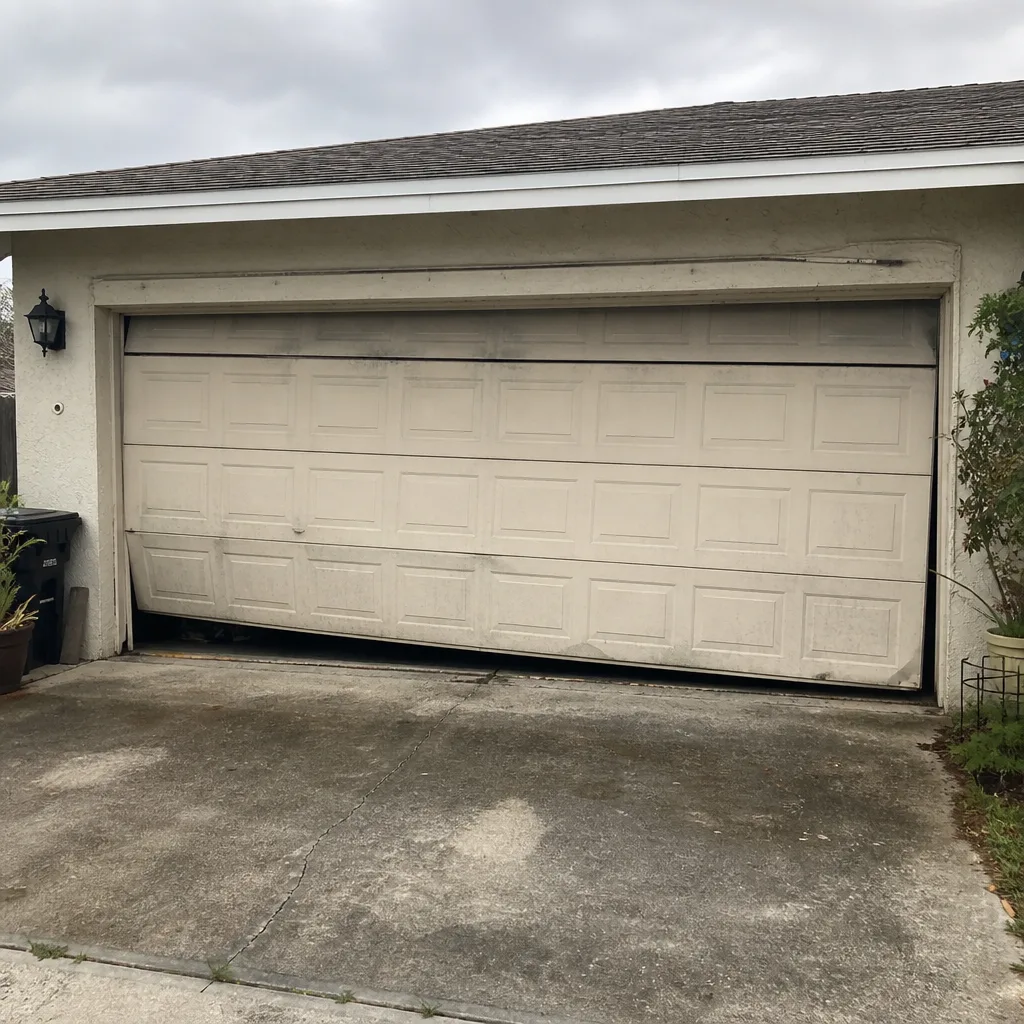 Before
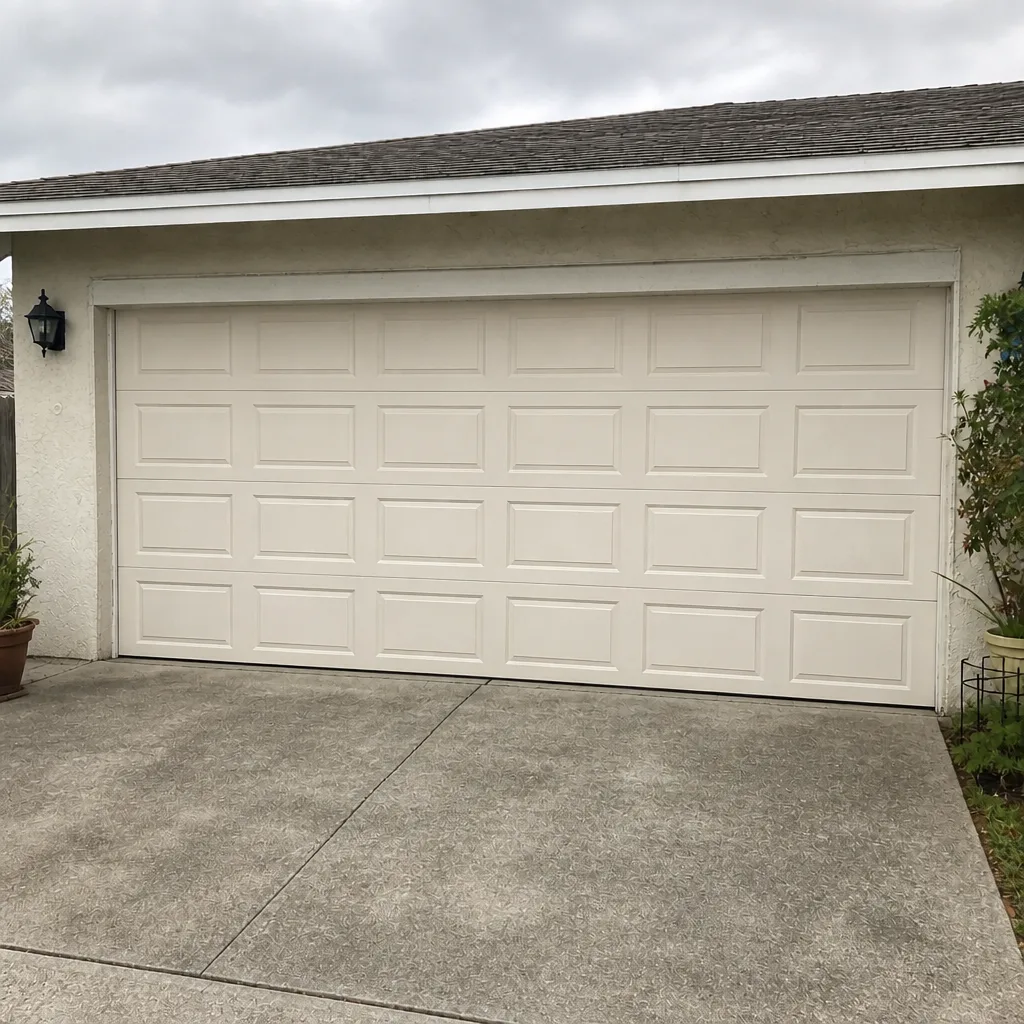 After
When to Call a Professional
Maintenance catches a lot, but some situations call for a trained technician rather than a homeowner with a spray can. Call a professional if you find rust or loosening at the bottom bracket or the cable ends, if the auto-reverse or photo-eye test fails, if the door comes down too hard or won’t stay up in the balance test, if a track is bent or a panel is visibly out of alignment, if the opener won’t respond consistently to the remote or reverses for no reason, or if the door makes a grinding or scraping sound as it moves. These are repair jobs with safety implications, and they’re beyond what a checklist can safely cover. Our technicians have up to 12 years of experience diagnosing exactly these problems.
Tundra Garage Door Repair works on the major door and opener brands you’re likely to own – LiftMaster, Chamberlain, Genie, Clopay, Amarr, Wayne Dalton, Craftsman, and Raynor – and handles repair, opener repair, and installation in one place. If you’re in Port St. Lucie and your door or opener needs attention, call (833) 847-0310 for a free estimate. The price is set per job by the written estimate, so you’ll know what you’re paying before any work starts.
Frequently Asked Questions
At least twice a year for the full checklist, with monthly rust checks and auto-reverse tests on top of that. The heat and humidity in Port St. Lucie wear on lubricants and metal faster than in dry climates, so a cadence that’s annual elsewhere should be semi-annual here. Call (833) 847-0310 for an exact assessment – estimates are free.
Silicone-based spray lubricant is the best all-purpose choice for a Port St. Lucie garage. It leaves a dry film, doesn’t collect dust, and doesn’t turn gummy the way WD-40 does. Apply it to the hinge pins, roller stems, torsion spring, bearing plates, and opener rail – not the tracks. If your door is noisy after lubricating, a worn part is the likely cause; call (833) 847-0310.
Yes, and it’s usually an opener sensitivity issue rather than a door problem. Hot motors run less efficiently, and the force settings that worked in cooler weather can drift. If the door closes harder or reverses for no reason, test the auto-reverse feature and have the opener checked. Call (833) 847-0310 and we’ll set the sensitivity correctly.
Look at the tracks for bending or misalignment, the panels for lateral shift, the bottom weather seal for tearing or detachment, and the opener for strange lights or frequent reversals. The opener’s electronics often take the most damage from a power surge. If anything looks wrong, stop using the door and call (833) 847-0310 for a free estimate.
Routine maintenance like lubrication, seal replacement, and safety testing doesn’t require a permit. Major structural changes and new door installations sometimes involve permits, so ask the city’s building department before starting that kind of work. For repair and opener questions, call (833) 847-0310 – we’ll tell you what your job involves.
It depends on the age and condition of the door, the cost of the repair versus replacement, and whether the structural panels or springs are compromised. If the door’s frame and panels are sound, repair is almost always the right call. If you’re weighing replacement, call (833) 847-0310 for a free estimate on both. Our garage door repair team handles the fixes; our installation side handles the replacements.
The Bottom Line
Garage door maintenance in Port St. Lucie isn’t about following a northern checklist harder. It’s about following the right checklist – one built around heat, humidity, and storm cycles. Look for rust monthly, especially at the bottom bracket. Use silicone lubricant instead of WD-40. Test the auto-reverse and photo-eye systems monthly, and have the opener’s sensitivity adjusted as the weather heats up. Run a post-storm inspection after every strong event. And know when to call: rust at the cables, bent tracks, and failing safety tests are repair jobs, not maintenance ones. Do these things and your door will last longer, close safer, and demand fewer repairs.
If something on your door doesn’t look right, we can take a look. Tundra Garage Door Repair covers garage door opener repair and full door service across Port St. Lucie. Call (833) 847-0310 for a free estimate. We answer 24/7. Fast dispatch from 7am to 7pm, Sunday through Friday. For a broader look at what we cover, visit Tundra Garage Door Repair.
Written by the team at Tundra Garage Door Repair.